Followers

9/6/12

México The Beautiful / México Hermoso


The sixteenth of September is Mexican Independence Day. This month Mexicans who live in and outside the country celebrate this joyful Mexican holiday - Mariachi sounds everywhere, the folklore of México is present all over and we especially enjoy the traditional food of the holiday  - antojitos Mexicanos, a variety of finger foods.


In recognition of this patriotic month, my fellow blogger, Pily, has invited us to share our Mexican recipes and show the world the beautiful cosas buenas of our México. Throughout the month of September, every Friday, Pily will be publishing Mexican food recipes in her blog. The recipes will come from everyone who wants to collaborate with her in showing the beauty of México. Follow the link to La Cocina Mexicana de Pily to see in more detail what this initiative is about. I recommend Pily's blog because there you will find very good recipes for authentic Mexican food.

Mexican food is vast and varied. There are simple dishes with few ingredients or with unusual ingredients less well known but no less tasty. Today I present a dish with the ingredient that represents my country better than any other. Although it is now known worldwide not too many people other than Mexicans dare to eat it.


I'm talking about cactus or nopal and nopalitos salad. It's a very simple dish but full of tradition and great taste in addition to its nutritional properties, as Mely pointed out in her blog.


Nopalitos Salad

4 fresh nopalitos (cactus pads)
1/2 c water
1/2 onion
3-4 sprigs of cilantro (flat leaf parsley can be a good substitute)
1 garlic clove
1 small lemon, sliced
1 green or red jalapeño, seeded and finely chopped
3 scallions, thinly sliced
1 small white onion, diced in small pieces
3 small radishes, diced in small pieces
2 tomatoes, seeded and diced in small pieces
1/2 bunch cilantro, finely chopped
2 T lemon juice
1 T olive oil
salt and pepper to taste


Holding each cactus pad with one hand (use gloves or kitchen tongs), cut off the bumps that contain the thorns with a sharp knife. Rinse the cactus well and then dice it. Place in a saucepan over the stove, add 1/2 onion, sprigs of cilantro, garlic clove, and lemon slices. Pour in the water, cover and simmer for about 15 minutes or until the cactus changes color. Drain and rinse a couple of times with cold water, discard the onions, garlic, cilantro and lemon slices. Place the cooked cactus in a large bowl, add the jalapeño, scallions, white onion, radishes, tomatoes and cilantro. Mix to combine all ingredients. Stir in lemon juice and olive oil. Season with salt and pepper to taste. Serve on tostada shells as a main dish or use as a side dish or salad.


Nopalitos Tostada

Note: Fresh nopales can be bought in Mexican grocery stores and sometimes in Farmers' Markets. Canned nopalitos can substitute for fresh. They come in a jar, packed in water or vinegar and are sold in most major supermarkets.


Apart from the recipe I want to show a bit of the Huichol Indians. These Indians are descendants of the Aztecs and most live in the highlands of Jalisco and Nayarit. Many have settled in cities like Guadalajara and Tepic. The Huichol struggle every day to keep their traditions alive. Their colorful beading work with chaquira and beads and embroidery are beautiful handicrafts. These craft techniques are passed down from elder to younger, teaching new generations and the world the reverent and symbolic value that their art has in relationship with nature.


On my trip to México last year, I had the opportunity to visit an indigenous Huichol community in Tepic, Nayarit, and learn a little of their crafts and enjoy their simple and delicious cuisine. Here are the photos. Enjoy the richness and beauty of México!


 Nopalitos and pot beans
 Nopalitos accompanying a blue corn quesadilla


8/14/12

The Tomato / El Tomate


Tricolor Tomato Salad


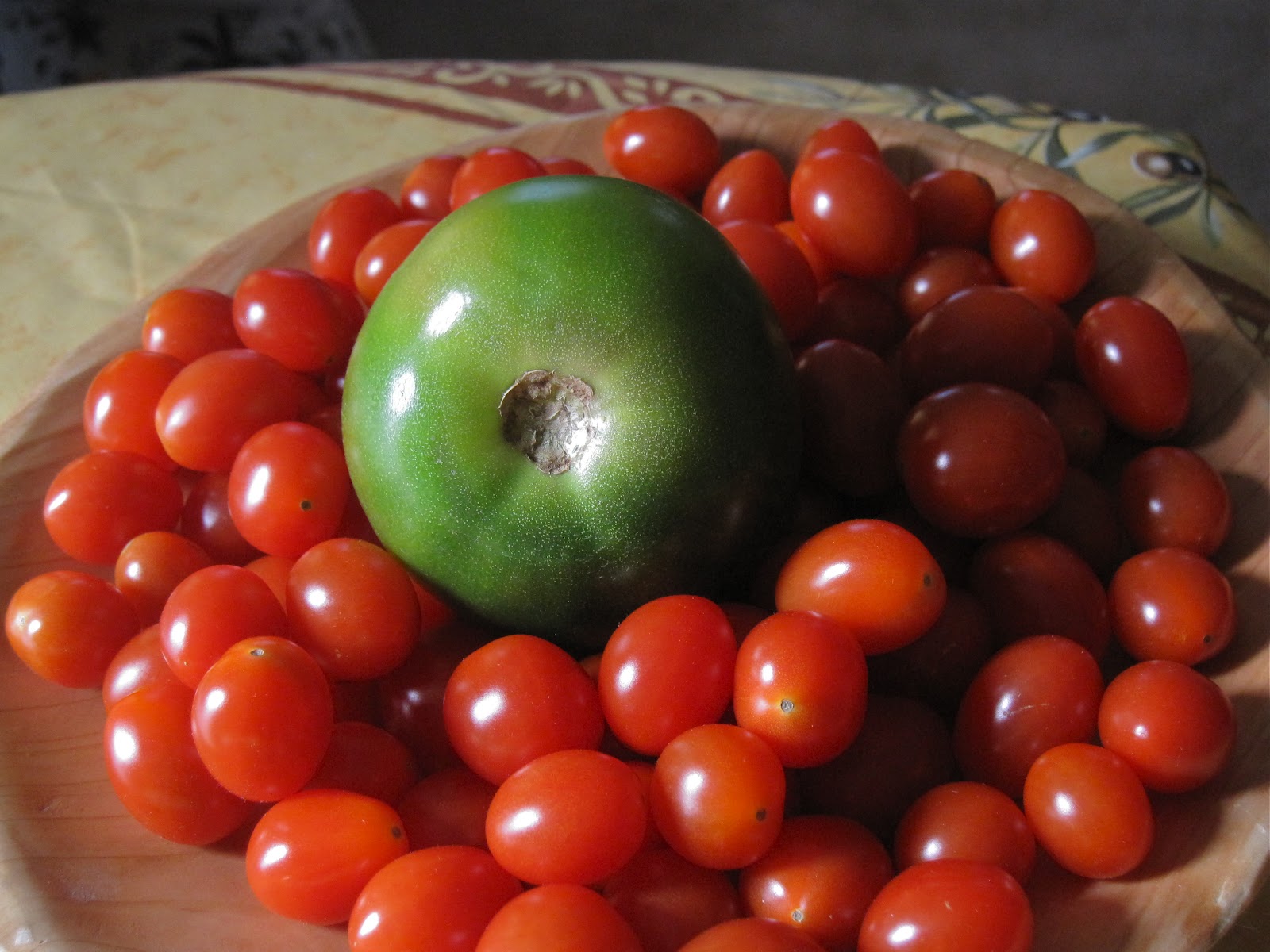
The tomato originated in South America but was spread around the world following the Spanish colonization of the Americas, and its many varieties are now widely grown.

Potato Dumplings in Tomato Sauce

Tomato Bruschetta with Basil and Parmesan Cheese

Technically a fruit rather than a vegetable, tomatoes are, however, use mostly in savory dishes. This fruit is consumed in diverse ways, including raw, as an ingredient in many dishes and sauces, and in drinks. Tomatoes are the based on many Mexican dishes and they are indispensable in Mediterranean cuisine. They are beautiful, colorful and the source of all kinds of inspirations for the home cook, the well known chef and the great poet, Pablo Neruda, who dedicated an ode to tomatoes.

(By Pablo Neruda)

The street
filled with tomatoes
midday,
summer,
light is
halved
like
a
tomato,
its juice
runs
through the streets.
In December,
unabated,
the tomato
invades
the kitchen,
it enters at lunchtime,
takes
its ease
on counter tops,
among glasses,
butter dishes,
blue salt shakers.
It sheds
its own light,
benign majesty.
Unfortunately, we must
murder it:
the knife
sinks
into living flesh,
red
viscera,
a cool
sun,
profound,
inexhaustible,
populates the salads
with Chile,
happily, it is wed
to the clear onion,
and to celebrate the union
we
pour
oil,
essential
child of the olive,
onto its halved hemispheres,
pepper
adds
its fragrance,
salt, its magnetism;
it is the wedding
of the day,
parsley
hoists
its flag,
potatoes
bubble vigorously,
the aroma
of the roast
knocks
at the door,
it's time!
come on!
and, on
the table, at the midpoint
of summer,
the tomato,
star of earth,
recurrent
and fertile
star,
displays
its convolutions,
its canals,
its remarkable amplitude
and abundance,
no pit,
no husk,
no leaves or thorns,
the tomato offers
its gift
of fiery color
and cool completeness.


Summer Salad

1 red radish, thinly sliced
1 small raw golden beet, peeled and thinly sliced
1 small pickled red beet, peeled and julienne 
1 cup small red, yellow and purple tomatoes, halve
1 handful of pea shoots
1-2 table spoon olive oil
Sea salt and freshly ground black pepper 

Arrange all vegetables on a plate, sprinkle with olive oil, add sea salt and  black pepper to taste.


This is the focaccia I prepared with Ajonjoli's recipe, it was delicious!


7/1/12

Baja and Alta California Ice Cream / Nieve de Baja y Alta California


With the summer at the door the days have been increasingly warm here in San Diego. The time for cold beer, refreshing lemonade and luscious ice cream is now here. With my trusty ice cream maker and The Perfect Scoop, the book by David Lebovitz, on hand, I am ready for the summer!

I've been making good use of this book since I got it for my birthday, back in February. I have been making homemade ice cream for me and my husband, he loves ice cream and eats a bowl of it every night. His favorite flavor has always been vanilla and the recipe for vanilla ice cream in The Perfect Scoop is terrific, I make it often.

 All the recipes in this book are wonderful and the book also has recipes for sorbets, frozen yogurt and for sauces and toppings. I have made several of the ice creams in this book beside the vanilla; Aztec hot chocolate, cinnamon and even frozen yogurt. Sometimes I follow the recipe to the letter but sometimes I feel creative and modify them to my taste or to what I have on hand. Today, I'll share an ice cream recipe with a few modifications. 

I used a wonderful wine syrup from the Guadalupe Valley in Baja California, Mexico and my favorite olive oil from the San Joaquín Valley in California, USA. I hope you enjoy it.


Wine Syrup from Baja California and Olive Oil from Alta California

Olive Oil and Wine Syrup Ice Cream

1 1/3  cups whole milk
1/4 cup honey (the recipe from the book calls for 1/2 cup sugar)
1/4 cup wine syrup (this is my addition)
Pinch of salt
1 cup heavy cream
6 large egg yolks
1/2 cup fruity olive oil

Warm the milk, salt, honey and wine syrup in a medium saucepan. Pour the cream into a large bowl and set aside. 

In a separate bowl, whisk together the egg yolks. Slowly pour the warm mixture into the egg yolks, whisking constantly, then scrape the warmed egg yolks back into the saucepan. 

Stir the mixture constantly over medium heat with a heatproof spatula, or a wooden spoon until the mixture thickens and coats the spatula. Pour the custard through a strainer and stir it into the cream. Whisk the olive oil into the custard vigorously until it's well blended, then stir until cool. 

Chill the mixture thoroughly in the refrigerator, then freeze it in your ice cream maker according to the manufacturer's instructions. 

The Perfect Scoop!


And now some pictures from the Guadalupe Valley:


5/10/12

Happy Mother's Day, 2012! / Felíz Día de las Madres, 2012!


Today is Mexican Mother’s Day. I know some readers are not Mexican but I want to share this holiday of my roots with you.

I am not a mother but I have great admiration for all women holding the title of “Mom”.  That is a big job and it takes strong, caring and beautiful people to take on such a great responsibility. All of you are that and more!

These flowers are for you, as a token of my appreciation for taking care of our children and for doing your best to ensure they become great people like yourselves.


Have a wonderful day and a very happy Mother’s celebration!


5/5/12

Homemade Yoghurt / Yoghurt Casero


Do you want to prepare yoghurt without any special equipment?

Here is a recipe:


Quieres preparar yoghurt casero sin ningún equipo especial? 

Aquí esta una receta: 
 Se necesitan frascos limpios con sus tapaderas.


Un frasco lleno de agua hirviendo.

Calentar 1/2 galón de leche hasta que alcance una temperatura de 180°F. Después dejar que la temperatura baje hasta 125°F y agregar  3 cucharadas de yoghurt comercial sin sabor. Revolver bien para combinar.

Llenar los frascos con la mezcla de leche y poner en una hielera portátil junto con el frasco de agua caliente (esto es para mantener la temperatura).

Cubrir con una toalla de cocina y cerrar la tapa.

Colocar la hielera en un lugar libre de vientos y dejar sin disturbar por toda la noche.

Tendrás un hermoso yoghurt por la mañana!

Refrigerar por 3 horas antes de servir.